How to use hard wax beads: melt, apply, peel, and why it cracks
Quick answer: melt the beads, drop the warmer to a hold setting until the wax flows off the applicator like warm honey, apply a coin-thick layer with the hair growth and a lip at the end, wait until it goes matte but still flexes, hold the skin taut and pull back fast and flat against growth. Cracking almost always means too thin, too cool or left too long; stringing means too hot or pulled too early.
What you need before the first melt
Hard wax beads (the same product is sold as beans, pellets or pastilles, the word only describes the granule size), a warmer with a 500ml pot for a salon or a 200ml pot for personal use, wooden or plastic applicators, a pre-wax cleanser and an after-wax oil. No strips: hard wax sets into its own film and is peeled off directly.
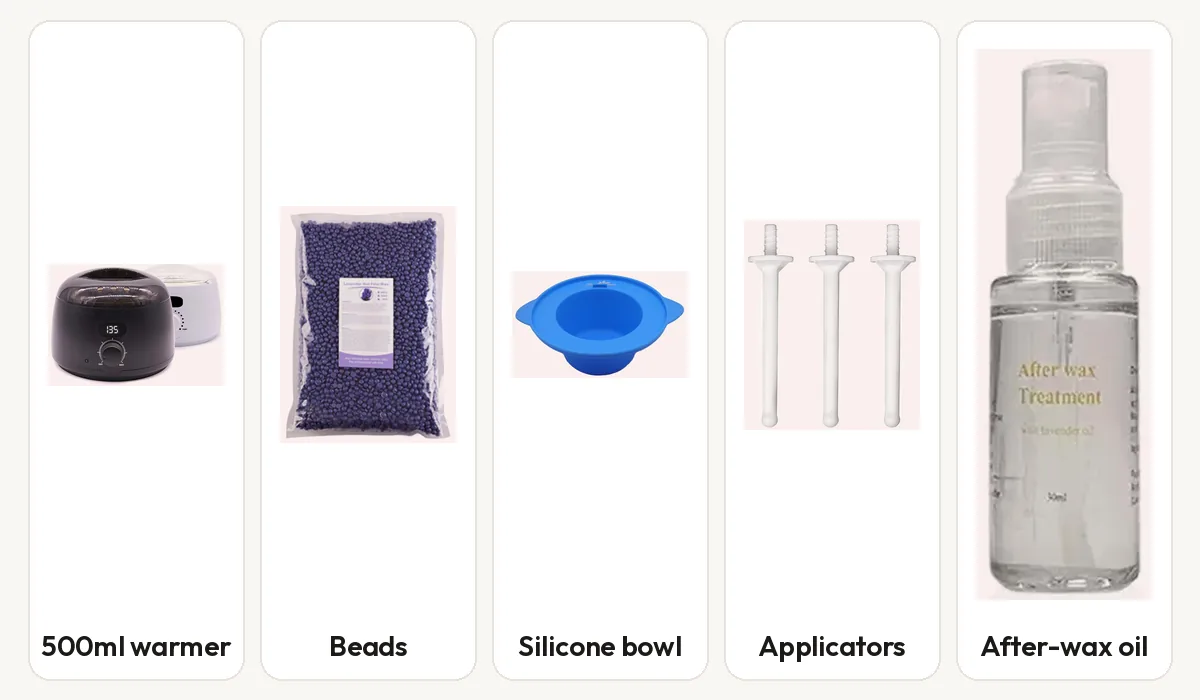
Use a pot you can keep at a steady temperature. A dial warmer works; a digital or touch-screen warmer holds the setting between clients with less drift. A collapsible silicone bowl inside the pot makes cleaning between colourways a ten-second job.
Step by step
- Melt. Fill the pot to about two thirds, set the warmer to its melt setting, and give it fifteen to thirty minutes with the lid on. Stir once the edges liquefy so the centre does not overheat while the outside is still solid.
- Drop to working temperature. Turn the dial down and wait until the wax flows off the applicator like warm honey: a slow, continuous ribbon, not a drip and not a rope. That consistency is the whole game.
- Test on the inner wrist. Warm, never hot. If it stings, wait.
- Prep the skin. Cleanse, dry, and dust lightly if the skin is damp. Hair should be about the length of a grain of rice; trim if longer.
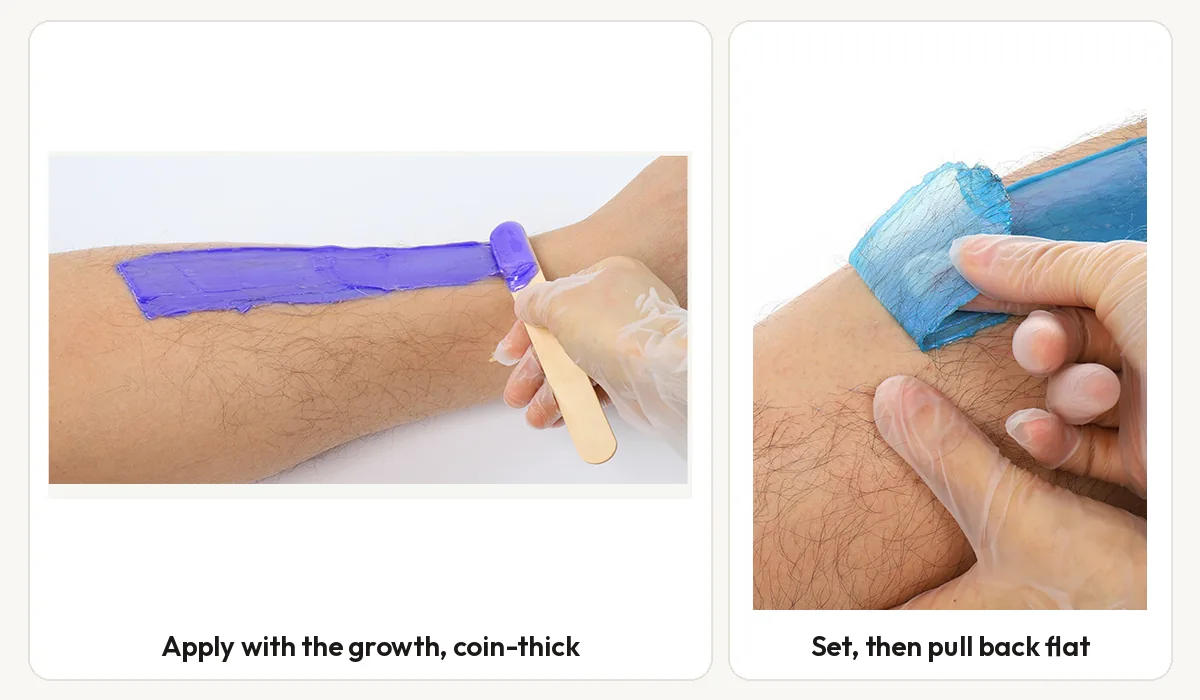
- Apply with the hair growth. A thick, even layer, roughly the thickness of a coin, with a slightly thicker lip at the end you will pull from. Press the applicator down so the wax coats the hair, then glide.
- Let it set. Twenty to forty five seconds depending on the formula and the room. Ready means the surface has gone from glossy to matte and no longer takes a fingerprint, but it still flexes.
- Hold the skin taut and pull against growth. Flick the lip up, then pull back fast and parallel to the skin, not upward. Press a hand on the area straight after.
- Finish. Remove any residue with a little after-wax oil, then soothe. Nothing hot on the area for the rest of the day.
What the temperature numbers actually mean
Most rosin-based hard waxes are worked on skin somewhere between about 45 and 60 degrees Celsius (113 to 140 Fahrenheit). The warmer is set higher than that to melt the beads, then turned down to hold. The exact number depends on the formula, the pot, the room and how full the pot is, which is why practitioners judge by flow rather than by the dial. Two honest rules: the datasheet of the wax you are holding wins over any number on a blog, including this one, and a pot that is left at melt temperature for hours will darken, thicken and lose grip, so drop it to hold as soon as it is fluid.
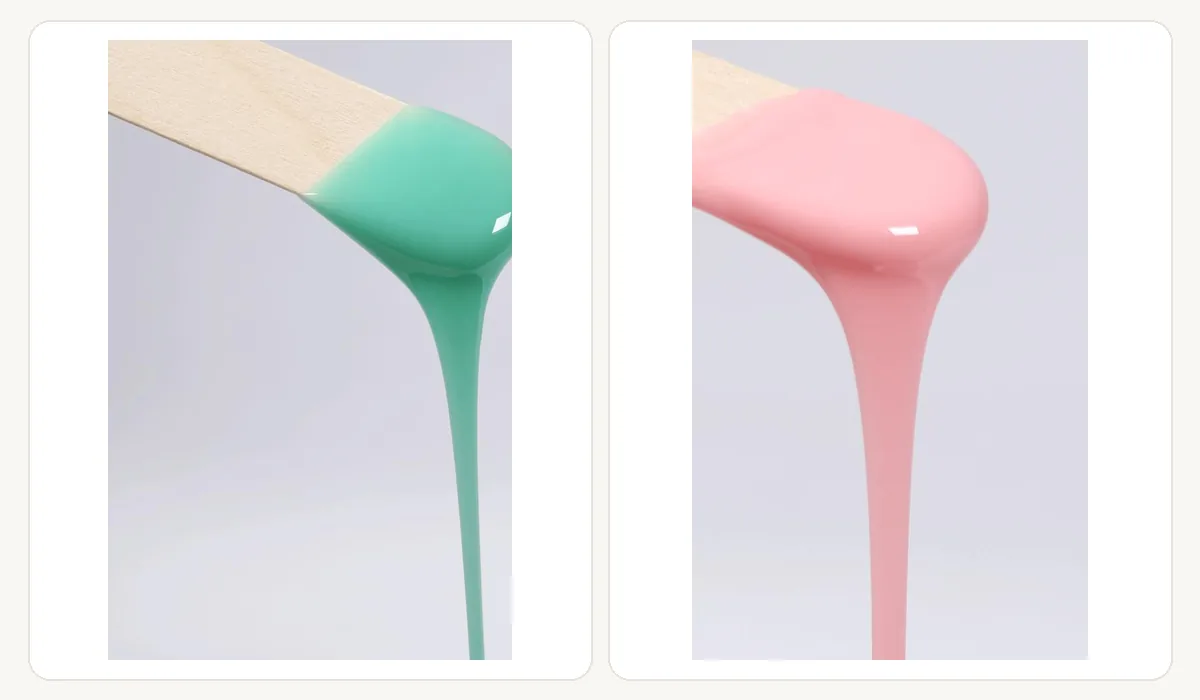
| What you see | What it means | What to do |
|---|---|---|
| Runs off the stick in a fast drip | Too hot | Turn down, wait two minutes, stir |
| Slow honey ribbon | Working temperature | Apply |
| Pulls into strings, tugs the stick | Too cool, or overworked | Turn up slightly, add fresh beads |
| Dull, crumbly, lumpy | Cold, or old wax reheated too many times | Refresh the pot |
Why hard wax cracks, breaks or will not grab
- Applied too thin. A thin film has no body to hold together on the pull. Thick and even beats thin and neat.
- Left to set too long. Hard wax is meant to be flexible when you pull. Overset wax goes brittle and shatters; work in strips you can remove within a minute.
- Applied too cool. Wax that is already thickening does not sink into the hair, so it lifts the surface and leaves the hair. Grip comes from wetting the hair while fluid.
- Skin not held taut. Loose skin folds with the pull and the strip tears instead of releasing.
- Pulling upward. The removal is a fast, flat pull back along the skin. Lifting away from the body breaks the strip and hurts more.
- Tired wax. Every remelt drives off some of the lighter components. Top the pot up with fresh beads rather than running the same pot for weeks.
Stringy, sticky wax that leaves residue is usually the opposite problem: too hot, or not set long enough. Give it ten more seconds before the pull, and let the pot cool a notch.
Hard wax, soft wax or sugaring
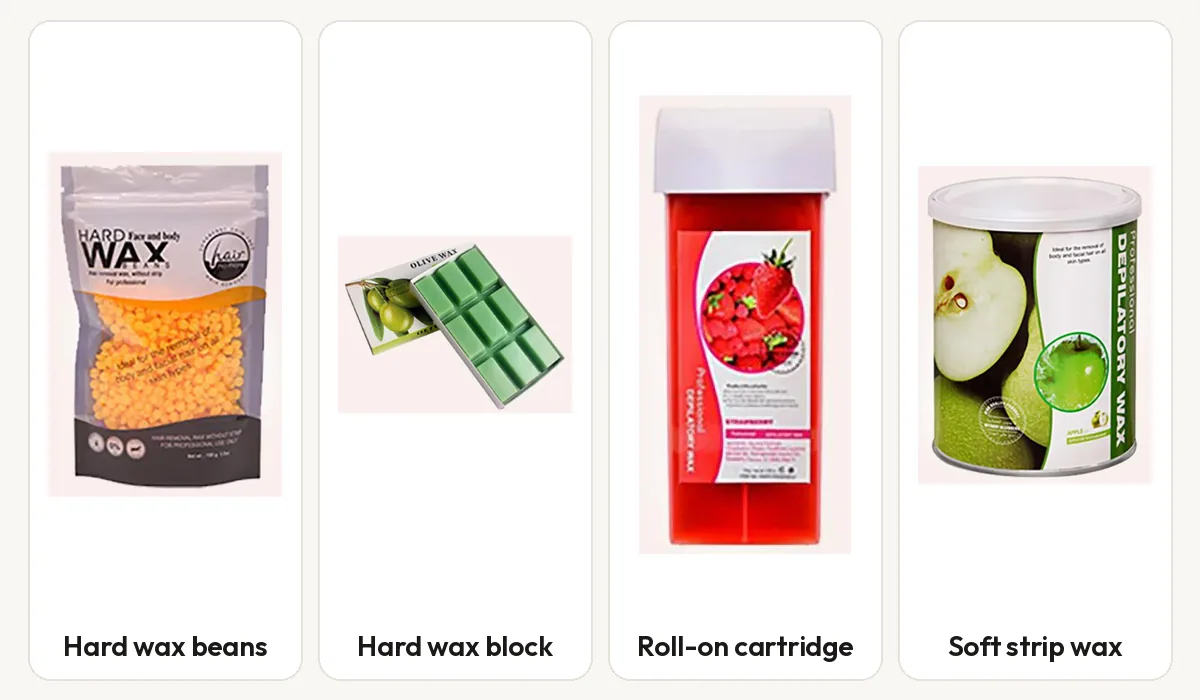
| Method | Removal | Where it wins | Format |
|---|---|---|---|
| Hard wax (stripless, film) | Sets, peeled off directly | Face, underarm, bikini and Brazilian, coarse hair on sensitive areas | Beads, blocks, discs |
| Soft wax (strip) | Thin layer, removed with a strip | Legs, arms, back, speed services | Cans, tins, roll-on cartridges |
| Sugaring | Paste flicked off by hand | Very fine hair, clients who prefer a water-based paste | Paste jars |
Most salons run two of the three. Hard wax for detail and intimate work, soft wax or roll-on for large areas. Both formats and the warmers that melt them can come from one supplier, which keeps melt behaviour consistent across the menu.
Running a pot all day
- Keep the pot at least half full. A shallow pot overheats and the wax ages faster.
- Run two pots or a divided pot if you switch between a facial colourway and a body colourway, rather than re-melting between clients.
- Lid on between clients. Dust and hair in the pot are the fastest way to a sticky batch.
- Write the date on a new bag when you open it. A 100g bag is a trial size; a 1000g bag is the salon workhorse and should not sit open for months.
Questions people ask
What temperature should hard wax beads be?
Fluid enough to flow off the applicator in a slow honey-like ribbon, warm but not hot on the inner wrist. In numbers that is usually somewhere between 45 and 60 degrees Celsius on the skin for rosin-based formulas, with the warmer set higher to melt and lower to hold. Follow the datasheet of your wax; judge by flow, not by the dial.
Can you re-melt hard wax beads?
Yes, a pot can be cooled and re-melted, and most salons run the same pot for several days. Each cycle ages the wax a little, so top the pot up with fresh beads and replace it entirely when it darkens, thickens or stops gripping.
Why is my hard wax not picking up hair?
Almost always one of three things: the wax was applied too cool so it sat on top of the hair instead of wetting it, the layer was too thin, or it was pulled upward instead of back along the skin. Fresh wax at working temperature, a coin-thick layer with a lip, and a flat pull fixes most cases.
How thick should hard wax be applied?
Thicker than feels natural to a beginner: roughly the thickness of a coin, even across the strip, with a slightly thicker lip at the pull end. Thin strips crack.
Is hard wax better than soft wax for a Brazilian?
For intimate and sensitive areas most professionals prefer hard wax: it grips coarse hair while releasing from skin without a strip, so the same area can be worked in sections. Soft wax is faster on large flat areas like legs.
Where this leads on our side
Everything in this guide was written around the beans we hold in stock: 24 colourways of rosin-based professional hard wax beans in 100g to 1000g packs, with a downloadable colour chart. If you buy by the carton, the in-stock list shows what ships in 3 days, and the pots and handheld heaters that pair with each format are on the wax warmers page.
Want the beans this guide was written on?
24 colourways in stock, 100g to 1000g, shipped in 3 days. Send formats and quantities and you get a price the same working day.