What is hard wax made of? Rosin-based formulas explained
Quick answer: professional hard wax is a rosin system (colophony and rosin esters, the grip), blended with microcrystalline or paraffin waxes for body and plant or mineral oils as plasticisers for flex, plus cosmetic-grade colour and fragrance at low percentages. Some brands swap the rosin for synthetic resins to avoid a known contact allergen; the trade-offs are grip on coarse hair, cost and working temperature. The MSDS tells you the hazard classification and composition ranges; it does not tell you whether the wax performs.
The grip system: rosin and rosin esters
Professional hard wax is built around rosin, also called colophony, the solid resin left after turpentine is distilled from pine sap, and around rosin esters made from it. Rosin is what makes a set film cling to hair while releasing from skin. It is the reason hard wax works without a strip.
Raw rosin is brittle and yellow. Formulators modify it into esters and blend grades to set the balance between grip and flexibility, which is why two rosin-based waxes can behave very differently on the same client. When a listing describes a wax as professional grade, the grip system is usually what it is talking about.
The body: waxes, oils and plasticisers
Rosin alone would crack. The rest of the formula gives it body and flex: microcrystalline or paraffin waxes for structure, plant or mineral oils and other plasticisers for elasticity and a lower working temperature, and sometimes plant butters or ceramides positioned as skin conditioning. The ratio of these to the rosin system decides whether a wax sets fast and firm or slow and pliable.
Colour and fragrance
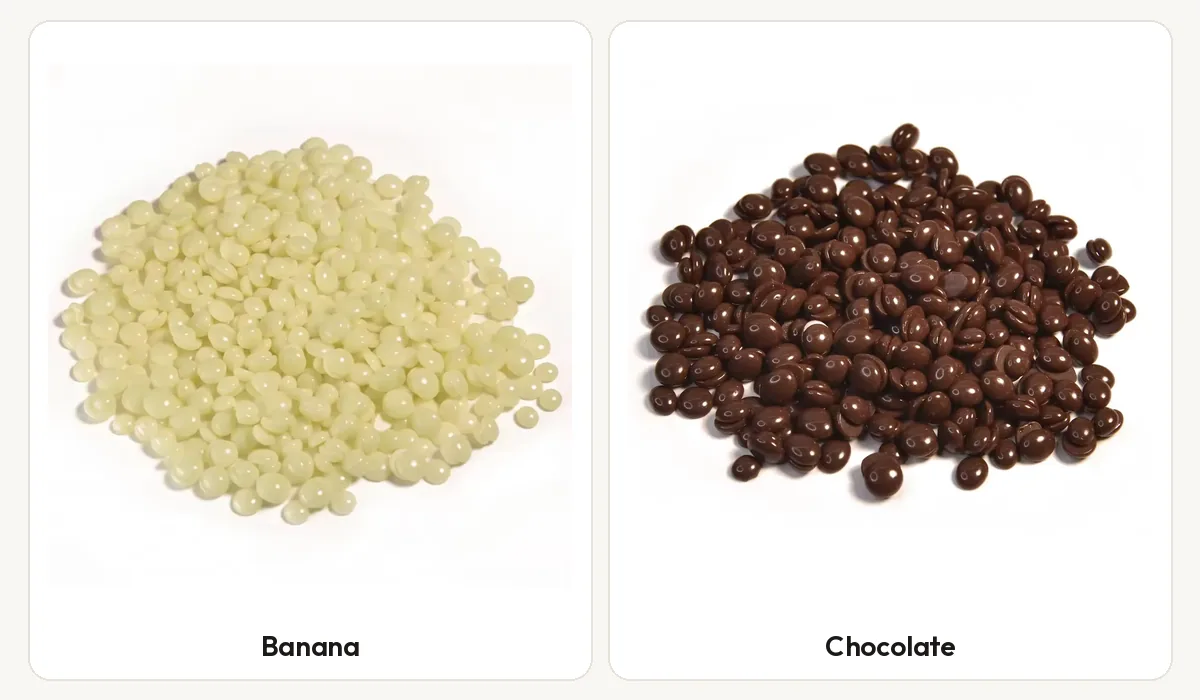
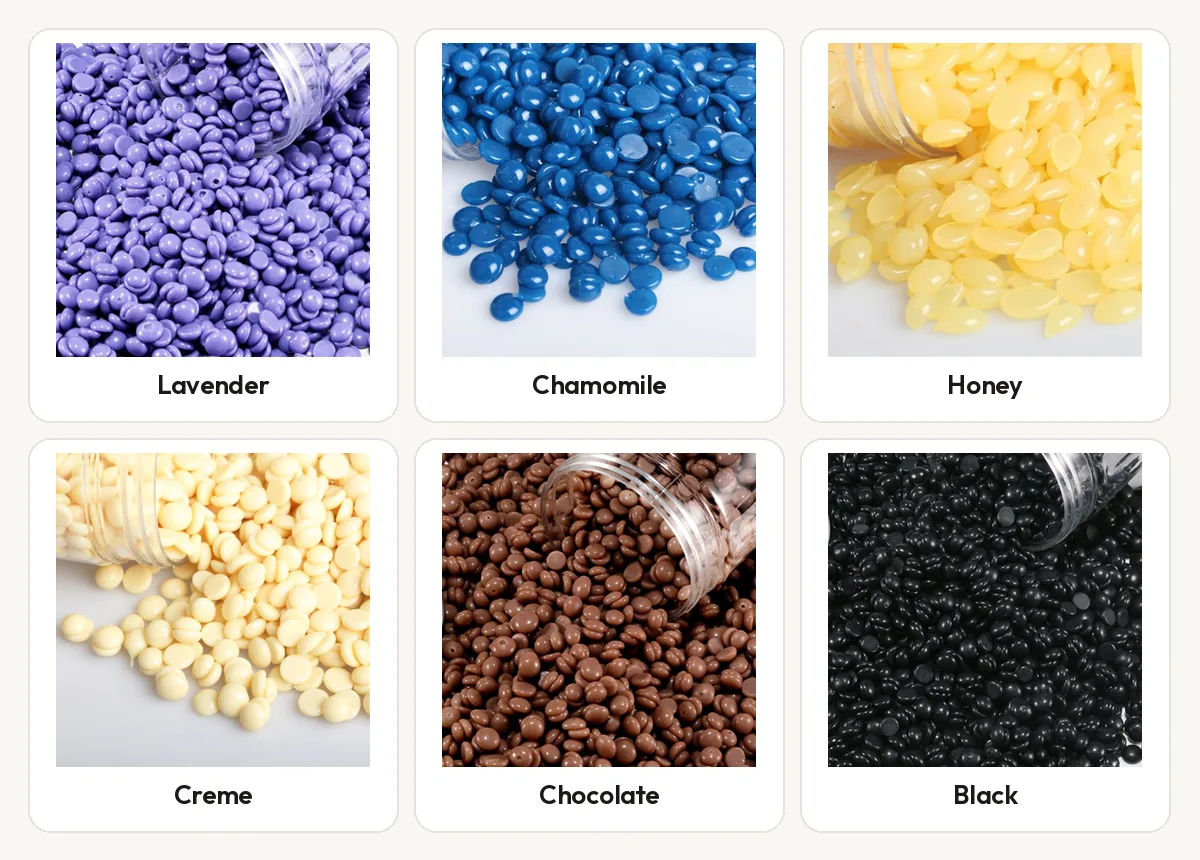
Colour comes from cosmetic-grade pigments or micas, fragrance from cosmetic-grade fragrance blends or essential oils, both at low percentages. Neither changes how the wax grips; they are how a range is organised on the menu. Our 24 colourways are colour and scent variants on a rosin-based professional grade base, which is why a salon can run a facial pot and a body pot from the same range and expect them to melt the same way.
Rosin-based versus synthetic-resin waxes
Some brands replace rosin with synthetic hydrocarbon resins or polymers. The main reason is that colophony is a recognised contact allergen for a small minority of people, so a wax formulated without it removes that specific trigger. The trade-offs are real: synthetic systems tend to cost more, behave differently on very coarse hair, and often need a different working temperature. Neither approach is "natural" or "chemical" in any useful sense; both are engineered resins. The honest way to choose is by your clientele. A salon with many reactive clients may keep a synthetic-resin wax alongside the main rosin-based pots; a salon whose menu is built on Brazilian and men's services usually stays with rosin-based grip. We formulate rosin-based professional grade wax and say so plainly, rather than describing it by what it is not.
What the MSDS tells you, and what it does not
A Material Safety Data Sheet written to the GHS standard lists the product's hazard classification, the composition ranges of the ingredients that drive that classification, handling and storage guidance, first aid, and transport information. It is the document a marketplace, a freight forwarder or a customs broker asks for first. Ours is issued by an independent laboratory to GHS Rev. 11 and can be downloaded from the compliance page, alongside the transport classification that confirms the wax ships as non-restricted goods.
What an MSDS is not: a quality certificate, a proof of performance, or an endorsement. It says what is in the wax and how to handle it safely. Whether the wax performs is what your sample test is for.
Reading claims on a label
- "FDA" wording. Cosmetics are not approved by the FDA. Under MoCRA, facilities register and products are listed. Our manufacturing partner is a US FDA-registered cosmetic facility (FEI 3031722471). Our own facility registration and MoCRA product listing are in progress. A brand claiming approval is making a claim the regulator does not issue.
- "Natural". Rosin is plant-derived and paraffin is petroleum-derived; most professional waxes contain both. The word tells you little about performance or tolerance.
- Ingredient lists. A supplier should be able to hand you the full ingredient declaration for a private label run, in INCI format, with the documentation that ships with the goods.
Storage and shelf life
Keep beads sealed, cool and dry, away from direct sun. Heat cycles are what age wax: a pot that is melted, cooled and re-melted many times darkens and loses grip long before a sealed bag in a cupboard does. Write the opening date on the bag, keep the working pot topped up from sealed stock, and retire wax that has gone dark and thick.
Questions people ask
Is hard wax natural?
Partly. The grip system is rosin, a pine-derived resin, and most formulas also use microcrystalline or paraffin waxes and plasticisers. Both plant-derived and petroleum-derived ingredients are normal in professional wax, so the word natural says little on its own.
Is rosin safe on skin?
Rosin has been the base of professional depilatory wax for decades and is used at working temperatures that do not burn when the wax is handled correctly. It is also a recognised contact allergen for a small minority of people, which is why patch testing new clients is standard practice and why some brands offer synthetic-resin alternatives.
What is the difference between hard wax and film wax ingredients?
Film wax is a hard wax variant with the flexibility pushed up, usually through the plasticiser and ester balance, so it can be applied thinner and stays elastic longer. The ingredient families are the same; the ratios differ.
Does hard wax contain paraffin?
Many professional formulas use paraffin or microcrystalline waxes for structure alongside the rosin system. The exact composition ranges are declared on the MSDS, and the full ingredient list is available for private label orders.
Can I get the ingredient list for a private label order?
Yes. A private label run ships with its documentation, including the MSDS, and the ingredient declaration for your label artwork is confirmed during the artwork proof stage.
Where this leads on our side
The wax this page describes is the one on our hard wax beans page: rosin-based professional grade, 24 colourways, with the MSDS and transport classification published on the compliance page. Brands that want the same base under their own label, with the ingredient declaration for their artwork, start on the private label page.
Need the documents for a listing or a customs file?
The MSDS and the transport classification are on the compliance page. For a private label run, the ingredient declaration for your artwork is confirmed at the proof stage.